
The Best Exercise Mats for Your Home Gym Workouts
If you're building a home gym, the exercise mat is the piece of gear you'll use every single session — yet most people buy it last and spend the least thought on it. That's a mistake. The right mat protects your joints, your floors, and your workout focus. The wrong one slips, bottoms out, smells like a middle school locker room after two months, and quietly becomes a hazard.
This guide covers everything: what separates a good mat from a bad one, which materials actually hold up, how to size it for your space and workouts, and who each type of mat is really built for. By the end, you'll know exactly what to buy — and why.
What Makes a Good Exercise Mat?
A quality exercise mat earns its spot in your gym by checking five boxes:
- Thickness: Enough cushion to protect wrists, knees, elbows, and hips on hard floors — without so much that you lose balance during standing exercises.
- Size: Big enough that you never step off the mat mid-exercise. Standard yoga mats (68" x 24") are useless for HIIT, burpees, or floor circuits.
- Grip: Non-slip on both surfaces — your feet and hands above, and the floor below. Slip during a plank or downward dog and the mat is a liability, not an asset.
- Durability: Materials that hold their shape after thousands of sessions, resist odor, and clean easily.
- Materials: Ideally non-toxic, eco-friendly, and free of the chemicals that make cheap mats off-gas for months.
Exercise Mat Materials: What You Need to Know
TPE (Thermoplastic Elastomer)
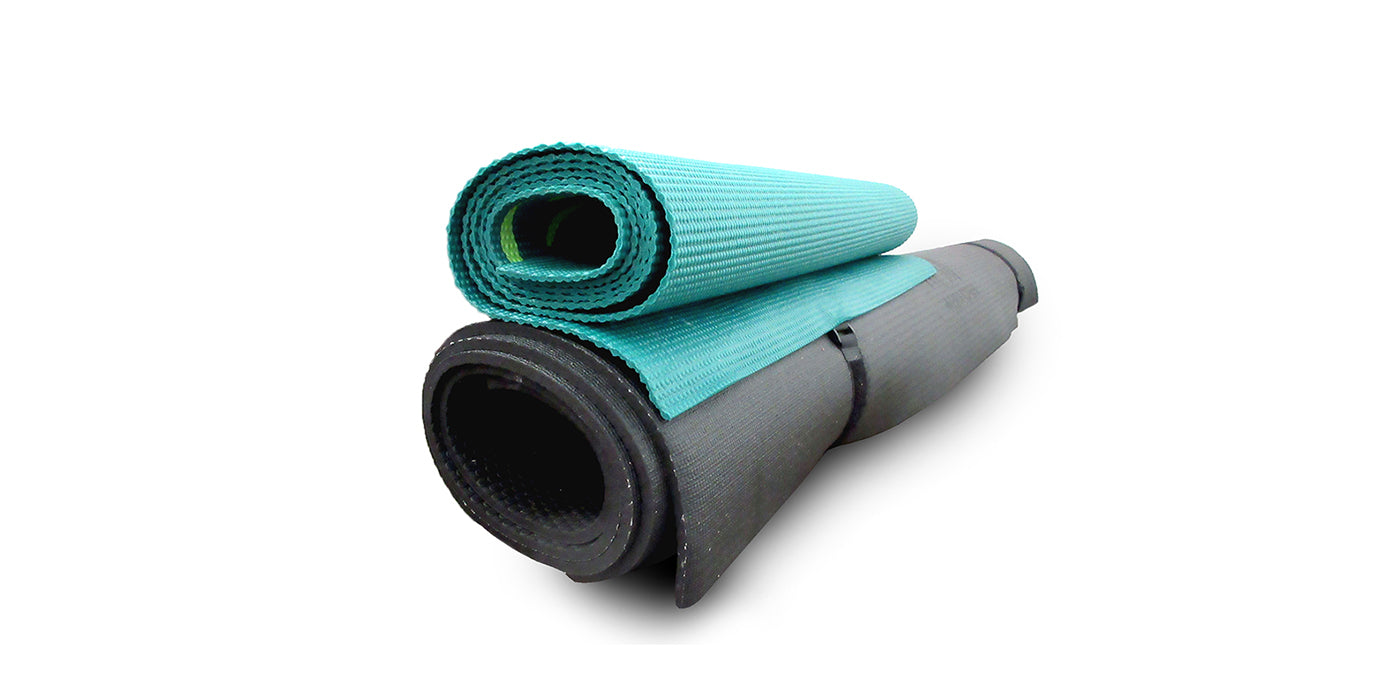
TPE is the gold standard for exercise mats in 2026. It's eco-friendly, recyclable, odor-resistant, and provides excellent cushion and grip. It doesn't contain PVC or latex, making it safe for people with allergies. TPE mats hold their shape under heavy use and don't develop the permanent deformations that cheaper materials do. This is what Gorilla Mats' large exercise mat is made from.
Natural Rubber
Excellent grip, good cushion, biodegradable. The downside: heavier than TPE, and not suitable for anyone with latex allergies. Best for yoga-focused use.
PVC / Vinyl Note: Gorilla Mats uses 16P-free certified PVC (PER) — free of the 16 phthalates commonly found in lower-quality mats.
Cheap, widely available, and that's about the end of the good news. PVC mats off-gas harmful chemicals, compress quickly with regular use, and most end up in a landfill within a year. Avoid.
Foam (NBR / EVA)
NBR foam is soft and inexpensive, common in interlocking floor tiles. Fine for light stretching or as supplemental flooring, but it compresses unevenly and lacks the surface grip you need for dynamic movement.
Exercise Mat Thickness Guide
| Thickness | Best For | Not Ideal For |
|---|---|---|
| 1/16" – 1/8" (1.5–3mm) | Pilates, balance work, travel | Anyone with joint sensitivity |
| 1/4" (6mm) | General yoga, light floor work | Intense HIIT, heavy jumping |
| 3/8" (10mm) | Most home gym workouts, HIIT, stretching | Very minimal; some balance purists prefer thinner |
| 1/2"+ (13mm+) | Joint rehab, seniors, gentle movement | Standing balance exercises |
The sweet spot for most home gym users: 10mm (3/8").) Thick enough to cushion a burpee landing or a kneeling push-up, thin enough that you still feel the floor under your feet during lunges and squats.
Exercise Mat Size Guide
This is where most people get burned. A standard yoga mat is 68" x 24" — about the size of a bath towel. For yoga, that's workable. For a home gym circuit, it's laughably small.
Here's how to size it right:
- Standard (72" x 24"): Yoga and light stretching only. You'll constantly step off during anything dynamic.
- Large (6' x 4' or 72" x 48"): The minimum for home gym use. Covers a single person doing full push-up to standing sequences.
- Extra-Large (7' x 5' or 84" x 60"): Ideal. You can do mountain climbers, bear crawls, inchworms — anything — without leaving the mat. This is what Gorilla Mats' large exercise mat is sized at.
Rule of thumb: measure your wingspan. Now measure your height. Your mat should be wider than your wingspan and longer than your height. Most people need at least 5' x 6' for total freedom of movement.
Who Needs What: Matching Mat to Workout
HIIT & Cardio
You need size (to move freely), grip (to prevent slipping mid-jump), and cushion (to absorb landing impact). Priority order: size > grip > cushion. Go with a 10mm TPE mat, extra-large.
Strength Training (Bodyweight & Dumbbell)
Similar needs to HIIT. Also consider floor protection — a thick, heavy mat protects hardwood or tile from dropped dumbbells and scraping. The Gorilla Mat weighs enough to stay anchored but is still rollable for storage.
Yoga & Pilates
Grip is paramount. Cushion matters less than you'd think — most experienced yogis prefer thinner mats (4–6mm) for better ground contact. But if you're doing yoga and other floor exercises on the same mat, 8–10mm hits the sweet spot. See our full large yoga mat guide.
Recovery & Stretching
Any quality mat works here. The size matters most — you want to sprawl out for pigeon pose or a full spinal twist without adjusting the mat every 30 seconds.
Seniors & Joint Rehab
Prioritize cushion (10–13mm), non-slip surfaces, and a mat that lies flat without curling edges (which are trip hazards).
Exercise Mat Comparison: What to Look For vs. What to Avoid
| Feature | Green Flag ✅ | Red Flag ❌ |
|---|---|---|
| Material | TPE, natural rubber, 16P-free certified PVC | PVC, vinyl, cheap foam |
| Size | Extra-large (6'+ x 4'+) | Standard yoga dimensions (24" wide) |
| Thickness | 8–12mm for home gym | Under 4mm for HIIT |
| Bottom surface | Textured, non-slip | Smooth — will slide on hardwood |
| Certifications | SGS tested, non-toxic | No certifications listed |
| Warranty | Lifetime or multi-year | 30 days or none |
Frequently Asked Questions
How thick should a home gym exercise mat be?
For most people doing a mix of cardio, strength, and stretching: 10mm (3/8"). This provides enough cushion for floor exercises without destabilizing balance during standing moves.
Can I use a yoga mat as an exercise mat?
A standard yoga mat is too narrow and often too thin for home gym use. If you buy an extra-large yoga mat (like Gorilla Mats' large yoga mat at 8mm), it can double as a home gym mat for most workouts. Just know that intense HIIT or jumping exercises are better served by the 10mm exercise mat.
How do I clean an exercise mat?
Mix water with a small amount of mild dish soap or diluted white vinegar. Spray and wipe down with a microfiber cloth. Avoid harsh chemicals, which degrade TPE and rubber surfaces. Let it air dry completely before rolling or storing.
What size exercise mat do I need for my home gym?
At minimum, 6' x 4'. Ideally 7' x 5' or larger. Measure your available floor space, then get the biggest mat that fits. You'll never regret extra real estate during a workout.
Are exercise mats worth it for home gyms?
Absolutely. A quality mat protects your floors (hardwood replacement costs thousands), cushions your joints (avoiding injury that sidelines your training), and provides grip that makes every exercise safer and more effective. It's the highest-ROI purchase in your home gym.
How to Care for Your Exercise Mat (So It Lasts)
A quality mat is a multi-year investment. Proper care extends its life significantly.
- Clean after sweaty sessions: Mix water with a small amount of mild dish soap or diluted white vinegar. Spray and wipe with a microfiber cloth. Let air dry completely before rolling.
- Avoid harsh chemicals: Bleach, acetone, and heavy-duty cleaners degrade TPE and rubber surfaces, causing premature breakdown of the grip texture.
- Store unrolled when possible: If you have the floor space, leaving the mat flat prevents curl-edge formation. If you must roll it, roll loosely with the top surface facing out.
- Keep out of direct sunlight: UV exposure degrades all mat materials over time. Store in a shaded area or in a mat bag when not in use.
- Don't wear shoes on the mat: Shoe soles bring in abrasive grit that scratches the surface and accelerates wear. Barefoot or grip socks only.
Exercise Mat Red Flags: When to Replace Your Mat
Even a quality mat has a lifespan. Here are the signs it's time to replace yours:
- The surface is visibly peeling, crumbling, or pilling
- You're sliding during exercises you used to grip confidently
- The mat has taken on a permanent compression set in high-contact areas (it doesn't spring back)
- It has developed an odor that cleaning doesn't resolve (internal bacterial growth)
- The edges are curling severely, creating a trip hazard
A quality TPE mat like the Gorilla Mat should show none of these signs for 5–10 years under regular use. If yours is deteriorating faster, the material quality was compromised from the start.
Our Recommendation: Gorilla Mats Large Exercise Mat
After evaluating materials, size, grip, and durability, the Gorilla Mats Large Exercise Mat is our top pick for home gym use. Here's why it consistently outperforms the competition:
- Extra-large dimensions — gives you the floor space to actually move without restriction
- 10mm TPE construction — premium cushion, zero toxic off-gassing, built to last years
- Non-slip bottom — stays anchored on hardwood, tile, and carpet without curling
- SGS tested and certified — you know what you're standing on is safe
- Lifetime guarantee — because a mat that needs replacing every year isn't a deal, it's a cost
Whether you're doing morning yoga, afternoon HIIT, or evening mobility work, one mat covers everything. That's the point.
Shop the Gorilla Mats Large Exercise Mat →
Also in Gorilla Mats Blog

7 Home Workout Myths That Need to be Busted
YOUR SATISFACTION IS OUR TOP PRIORITY
Highest Quality Products - 100% Money Back Guarantee - Lifetime Warranty - Fast & Free Shipping on All Orders!

Follow
© Yo Gorilla Mats
Sign up to get the latest on sales, new releases and more …
Privacy Policy - Terms of Service - Refund Policy - Lifetime Warranty