
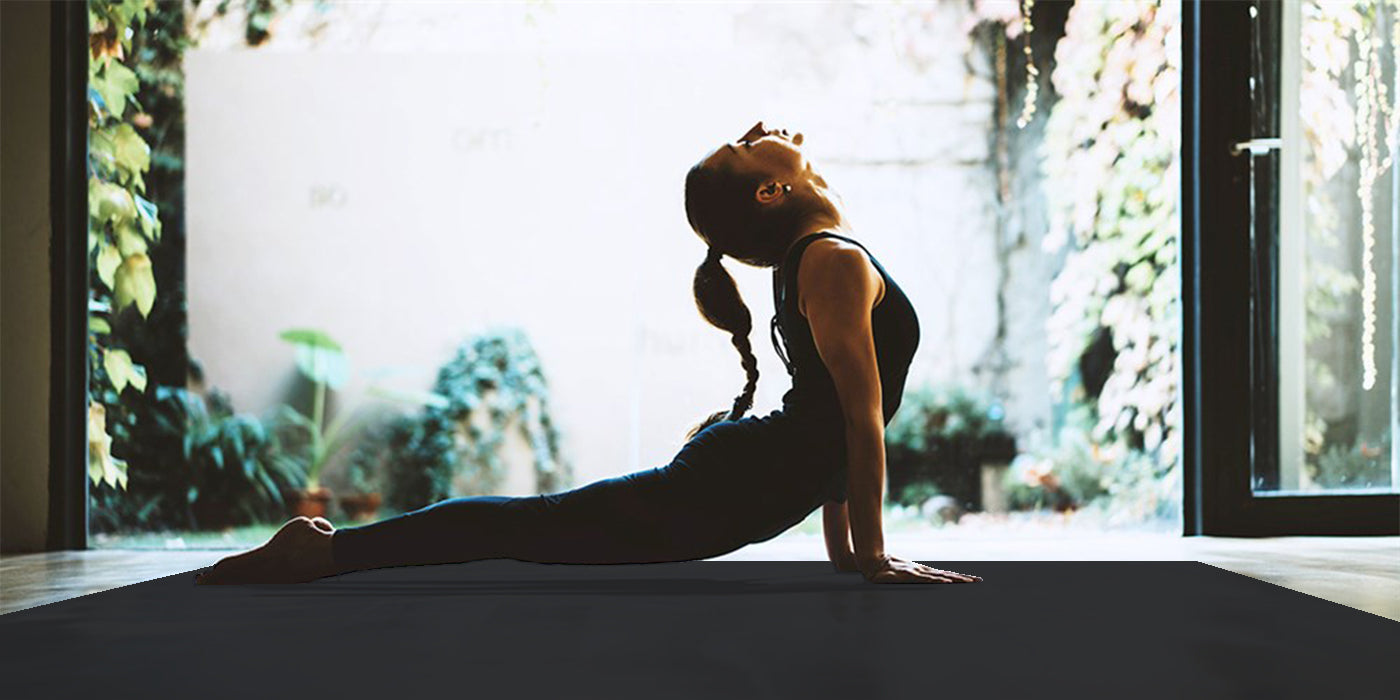
The Best Large Yoga Mat for Your Home Studio
Your yoga practice deserves better than a 24-inch strip of foam. If you've ever adjusted your mat mid-flow, slipped during a warrior sequence, or felt your wrists ache on a paper-thin surface, the issue probably isn't your form — it's your mat.
Large yoga mats have changed what's possible for home practice. This guide breaks down exactly what to look for: why size matters more than most yogis realize, why 8mm is the thickness sweet spot, which grip materials actually perform when you're sweating through a hot flow, and why eco-conscious materials aren't just marketing fluff. Plus a direct recommendation for the best large yoga mat on the market in 2026.
Why Large Yoga Mats Beat Standard Mats
Standard yoga mats are 68"–72" long and 24" wide. For a gentle yin class at a studio, that's workable. For a home practice that includes dynamic flows, full splits, wide-legged forward folds, or any partner work — it's constantly limiting your practice.
Here's what you gain with a large mat:
- Freedom of movement: Extended warriors, wide-angle poses, and supine spinal twists all stay on the mat. You stop mentally tracking your position relative to mat edges.
- Comfort in transitions: Moving from downward dog into a low lunge, then sweeping forward — on a standard mat, your back foot nearly hangs off. On a large mat, every transition is smooth.
- Multi-use functionality: A large yoga mat doubles as a home gym mat. Props, blocks, and straps can sit on the mat beside you instead of on bare floor.
- Better for taller yogis: If you're 5'8" or above, your head or feet will extend past a standard mat in savasana. A large mat eliminates this entirely.
The Gorilla Mats Large Yoga Mat is sized at 7' x 5' — wide enough to do a full side-stretch and long enough for tall practitioners in every pose.
The 8mm Thickness Sweet Spot
Yoga mat thickness is where the most disagreement exists among practitioners. Here's a clear breakdown:
| Thickness | Feel | Best For | Drawbacks |
|---|---|---|---|
| 1–2mm | Almost nothing — essentially a hygiene layer | Studio use on top of rentals | Zero joint protection |
| 3–4mm | Minimal — traditional yoga thickness | Experienced practitioners who want ground feel | Hard on wrists and knees on tile or hardwood |
| 6mm | Standard cushioning | General yoga on carpet or padded floors | Marginal on hard floors for sensitive joints |
| 8mm ✅ | Substantial cushion without instability | Most home practice, mixed yoga/fitness use | Slightly heavier than thinner mats |
| 10mm+ | Very soft | Gentle yoga, seniors, joint rehab | Too much give for balance poses |
At 8mm, you get meaningful joint protection for wrists in plank and downward dog, knees in low lunge and pigeon, and hips in supine poses — without the wobbly feeling that makes tree pose or warrior III harder than it should be. It's the ideal thickness for the vast majority of home yogis.
Grip: What Actually Works When You're Sweating
Mat grip matters most when you need it most — mid-flow, when your hands are starting to sweat. Here's how the main materials compare:
TPE (Thermoplastic Elastomer)
High grip even when moist. Closed-cell structure means sweat doesn't absorb into the mat (which kills grip and causes odor). Easy to wipe down mid-practice. Our top recommendation for home studio use.
Natural Rubber
Exceptional raw grip — the material most hot yoga practitioners prefer. Slightly heavier and not suitable for latex-sensitive users. Biodegradable.
Polyurethane (PU) Top Layer
Common in premium studio mats. Grip actually improves when wet — ideal for hot yoga. The PU layer is paired with a natural rubber base in most cases.
PVC
Surprisingly decent grip when new. But degrades quickly, starts to peel, and off-gasses chemicals you don't want in a home studio. Avoid for regular practice.
For home studios: TPE delivers the best combination of grip, durability, ease of cleaning, and eco-friendliness. The Gorilla Mats Large Yoga Mat uses premium TPE with a textured surface that holds up session after session.
Eco-Friendly Materials: More Than Marketing
The yoga community cares about sustainability — and the mat industry has taken notice, for better and worse. Here's how to separate real eco-credentials from greenwashing:
- TPE: Recyclable, free of PVC, phthalates, and latex. Manufactured with significantly lower emissions than PVC. This is genuine eco-friendliness backed by chemistry.
- Natural rubber: Renewable, biodegradable, low environmental impact. The sustainable choice if latex allergies aren't a concern.
- Jute/cork: Natural materials with excellent sustainability credentials. Trade-off: less durable and harder to clean than TPE or rubber.
- PVC labeled "eco": Red flag. PVC cannot be made eco-friendly — the base material is inherently problematic. Marketing language around "eco PVC" is misleading.
Look for SGS certification (third-party safety testing) and explicit statements that the mat is free of AZO dyes, heavy metals, and phthalates. The Gorilla Mats Large Yoga Mat is SGS certified and passes these tests.
Large Yoga Mat Size: What Dimensions Do You Need?
Standard mat: 24" wide x 68–72" long. Barely enough for one person doing seated poses.
Here's how larger dimensions improve your practice:
- 48"+ wide: You can do wide-legged postures (Goddess, Warrior II, Triangle) without stepping off the mat.
- 72"+ long: Taller practitioners fit in savasana without their head or feet hanging off.
- 60"+ wide: Ideal for partner yoga or when you want total freedom in every direction.
Our recommendation: minimum 6' x 4' for solo home practice. If budget allows, 7' x 5' gives you room you didn't know you needed until you had it.
Frequently Asked Questions
What size yoga mat should I buy for home practice?
At minimum, 6' x 4' (72" x 48"). If you're taller than 5'8" or like wide-legged poses, go 7' x 5'. You won't regret the extra space.
Is 8mm too thick for yoga?
Not for most practitioners. The concern with thick mats is instability during balance poses, but 8mm TPE provides enough firmness that balance isn't compromised. If you're doing advanced standing balances and want maximum ground feel, consider 6mm — but for most home yogis, 8mm is ideal.
How long do large yoga mats last?
A quality TPE or rubber mat should last 5–10 years with regular use and proper care. Warning signs it's time to replace: the surface is peeling, you're sliding, or it has taken on a permanent compression set (i.e., it doesn't spring back).
Can a large yoga mat be used as an exercise mat?
Yes — especially at 8–10mm thickness. The Gorilla Mats Large Yoga Mat works for yoga, HIIT, stretching, and floor exercises. If your workouts skew more cardio/strength than yoga, consider the Gorilla Mats Large Exercise Mat at 10mm for extra impact cushioning.
How do I clean a large yoga mat?
Spray with a diluted solution of water and white vinegar (or a yoga mat spray), wipe with a soft cloth, and air dry flat or hanging over a door or rack. Do not machine wash or submerge TPE mats. Clean after every sweaty practice to prevent odor buildup.
Large Yoga Mat vs. Standard Mat: Direct Comparison
| Feature | Standard Yoga Mat | Large Yoga Mat (Gorilla Mats) |
|---|---|---|
| Dimensions | 68–72" x 24" | 84" x 60" (7' x 5') |
| Thickness | 3–6mm typical | 8mm |
| Material | Varies (often PVC) | Premium TPE |
| Wide-legged poses | Feet step off mat | Full pose on mat |
| Savasana (taller users) | Head or feet hang off | Fully supported |
| Joint protection | Minimal on hard floors | Substantial, wrist-friendly |
| Doubles as exercise mat | No | Yes |
| Certification | Often none | SGS certified, non-toxic |
| Warranty | 30 days to 1 year | Lifetime |
Setting Up Your Home Yoga Studio
A large yoga mat defines your practice space. Here's how to set it up for maximum benefit:
- Orientation: Leave at least 18" of clearance on each side of the mat for arm extensions, side stretches, and transitions that carry you off-center.
- Props storage: Keep blocks, straps, and a blanket at the head of the mat so they're accessible without leaving your practice space mid-session.
- Screen placement: If you follow video-guided classes, position the screen so it's visible from standing, all-fours, and supine positions. This usually means mounting slightly above eye level when you're on the floor.
- Ambient conditions: Yoga in a warm room (75–85°F) improves flexibility and makes challenging stretches more accessible — not as extreme as a heated studio, but noticeably more open than a cold room.
- Lighting: Softer, warmer lighting creates a more meditative atmosphere for yin and restorative practice. Natural or bright light works better for dynamic vinyasa where you need to see your form clearly.
Our Recommendation: Gorilla Mats Large Yoga Mat
After evaluating every factor that matters for home studio practice, the Gorilla Mats Large Yoga Mat earns the top spot:
- 7' x 5' dimensions — genuinely extra-large, not just marketing
- 8mm premium TPE — the thickness sweet spot for joint protection without balance compromise
- Non-slip top and bottom — stays put on hardwood and tile; hands stay put during downward dog
- SGS certified, non-toxic — no off-gassing, no harsh chemicals in your practice space
- Lifetime guarantee — buy once, practice for years
Your practice is worth a mat that actually supports it. The Gorilla Mats Large Yoga Mat is what a home studio deserves.
Shop the Gorilla Mats Large Yoga Mat →
Also in Gorilla Mats Blog

7 Home Workout Myths That Need to be Busted
YOUR SATISFACTION IS OUR TOP PRIORITY
Highest Quality Products - 100% Money Back Guarantee - Lifetime Warranty - Fast & Free Shipping on All Orders!

Follow
© Yo Gorilla Mats
Sign up to get the latest on sales, new releases and more …
Privacy Policy - Terms of Service - Refund Policy - Lifetime Warranty